Key Takeaways
- Divorce can cause a wave of different feelings like sadness, anger, anxiety, confusion, guilt, and uncertainty.
- Talk openly and honestly about the divorce using age-appropriate language.
- Reassure your child that the divorce is not their fault and that both parents love them.
- Consistent routines can help children feel more secure during the divorce.
- Watch for changes such as behavior problems, regression, withdrawal, anxiety, or difficulty focusing.
- Stay connected by having one-on-one time and doing fun activities.
Divorce is a major adjustment that can be devastating for everyone in the family, but it can be especially difficult for children who may not fully understand why their parents are separating or what will happen next. Children may experience sadness, anger, confusion, anxiety, or even guilt. Some may worry that the divorce is their fault because of something they should have done or didn’t do, and are scared that they will lose a relationship with one or both of their parents. Not seeing both parents every day like they usually do, can be really emotional.
While you can’t control the emotions your child experiences during the divorce, you can help them feel safe, supported, and heard. Providing reassurance, maintaining routines, and keeping communication open can make the adjustment period easier.
Talk To Your Child In An Age-Appropriate Way
Children need parents to be honest about the divorce and what will happen, but the amount of detail you share should depend on their age and developmental level. Explain what’s happening in simple, age-appropriate language, without sharing adult details about the divorce. Allow your child to ask questions and reassure them that it’s okay not to know exactly what the future will bring. Be prepared to have multiple conversations about the divorce and how it will affect the family. Children often process major changes gradually because their emotional and cognitive skills are still growing, and they’ll likely have more questions or concerns over the coming days, weeks, and months.
Reassure Your Child That The Divorce Is Not Their Fault
Children sometimes believe they caused their parents’ divorce, particularly younger children who may have difficulty understanding the complex reasons behind adult relationships. They may think that an argument, their behavior, or something they did caused the separation. Alternatively, they may believe that something they do, like being particularly well-behaved, will prevent the divorce. Reassure your child that the divorce isn’t their fault, and the decision to divorce was between their parents and nothing they could have done or said would have changed this.
Let Your Child Express Their Feelings
Your child may experience a wide range of emotions during and after the divorce. They might feel sad one day and angry the next, while some children may have difficulty expressing their feelings at all. Give your child space to experience their emotions without judgment or pressure to “fix” how they feel. Here are common reactions to divorce that children could feel.
Guilt
Younger children may be more likely to blame themselves because they naturally tend to view situations from their own perspective and have difficulty understanding the complex reasons behind a divorce.
Anxiety
Major changes in routine make kids feel anxious and uncertain. One of the best ways to help is to make their new routine as predictable and consistent as possible. Explain where they’ll be staying, when they’ll see each parent, and what their days will look like, as best as you can. For younger children, a simple calendar on the wall showing where they’ll be each day can help them feel more secure. The more consistent their schedule, the easier it may be for your child to adjust and feel comfortable with the changes.
Behavior Issues
Some children may act out during a divorce because they’re struggling with anxiety, anger, frustration, or simply testing where the new boundaries are. Clear expectations and a structured routine can help children feel more secure, so when possible, try to keep rules, routines, and expectations consistent between both households.
Regression
Life transitions can cause some kids to need more attention than usual with things they used to be able to do independently. You might notice disrupted sleep or a return to habits they’d outgrown. While these changes can cause stress for parents, it is important to stay calm, offer reassurance, and use positive reinforcement to support your child in processing this change.
Withdrawing
Some children pull away and become quiet or distant while trying to adjust to their new circumstances. Give your child space to process their emotions, but keep trying to stay connected by planning a special outing, playing their favorite game, or doing any activity that they want to do. Let your child know you’re there to listen whenever they’re ready to talk, and when they do open up, listen without judgment. If they continue to withdraw, this can be a sign of depression or an adjustment disorder, so keep a close eye on them, and reach out to a children’s therapist for help if you’re concerned.
Trouble Focusing
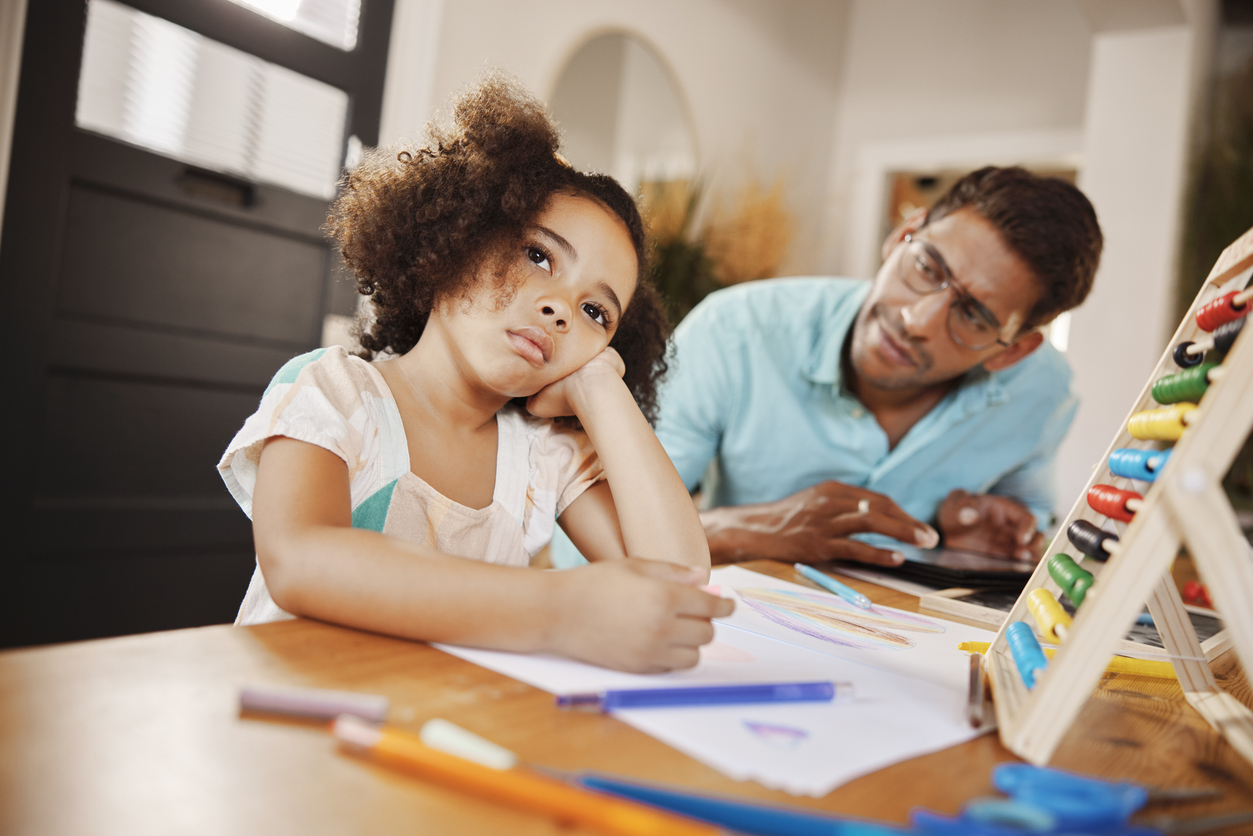
When life feels chaotic, schoolwork can suffer, so make doing homework a nightly routine for them, and something you can do together. It’s also a good idea to let their teachers know what’s happening so they can get extra support at school if they need it.
Divorce Tips For Parents
Here are tips on how to help your child feel secure, supported, and loved.
Maintain Consistent Routines
Familiar routines give children a sense of stability during an uncertain time. Try to keep to their regular schedule with school, homework, activities, and bedtime regardless of which parent they’re with. Work together, not against each other, to make sure everything is as consistent and easy as possible for your child.
Put Your Child’s Needs First
Don’t put them in the middle of arguments or make them choose sides. Reassure them that both parents love them and that the divorce isn’t their fault.
Don’t Talk Negatively About The Other Parent
Even when you’re frustrated or angry with your former partner, don’t criticize them in front of your child. Negative comments make children feel caught between their parents and increase their stress and anxiety.
Divorced Couples Counseling & Parent Coaching At Georgetown Psychology In Bethesda, DC, McLean, Alexandria & Virtually
Divorce can be difficult for everyone in the family, but you don’t have to navigate this challenging transition alone. Georgetown Psychology offers divorced couples counseling, parent coaching, and child therapy to help families communicate more effectively, manage conflict, and support children through the transition.
Our therapists offer in-person sessions in Bethesda (MD), Georgetown (DC), and McLean (VA), as well as virtual therapy for clients in 43 states. To schedule an appointment or for any questions, contact us at scheduling@georgetownpsychology.com, fill out our online form, or call us at (301) 652-5550.
Our clinics also offer emotional and psychological testing, adult ADHD testing, autism assessments, ADHD & Executive Function Coaching, cognitive baseline testing, and psychodynamic therapy.
FAQs
How long does it take for children to adjust to divorce?
There isn’t a set timeline for how long it takes a child to adjust to divorce. Some children can adapt to the change within several months, or it could take a year or longer, especially if the divorce involves major changes, ongoing parental conflict, or disruptions to their routines.
Children may also adjust in stages. They might seem fine initially, but start to feel sad, anxious, angry, or have behavioral changes later as they begin to process the separation.
What are common signs that a child is struggling with divorce?
Children may experience sadness, anxiety, anger, guilt, withdrawal, trouble sleeping, changes in behavior, difficulty concentrating, or regression in skills they had previously overcome.
Should parents tell children why they are getting divorced?
Parents should be honest about why they’re getting divorced, but keep explanations age-appropriate. Children don’t need details about marital problems or adult conflicts, so explain what they need to know and how the divorce will affect their daily lives.