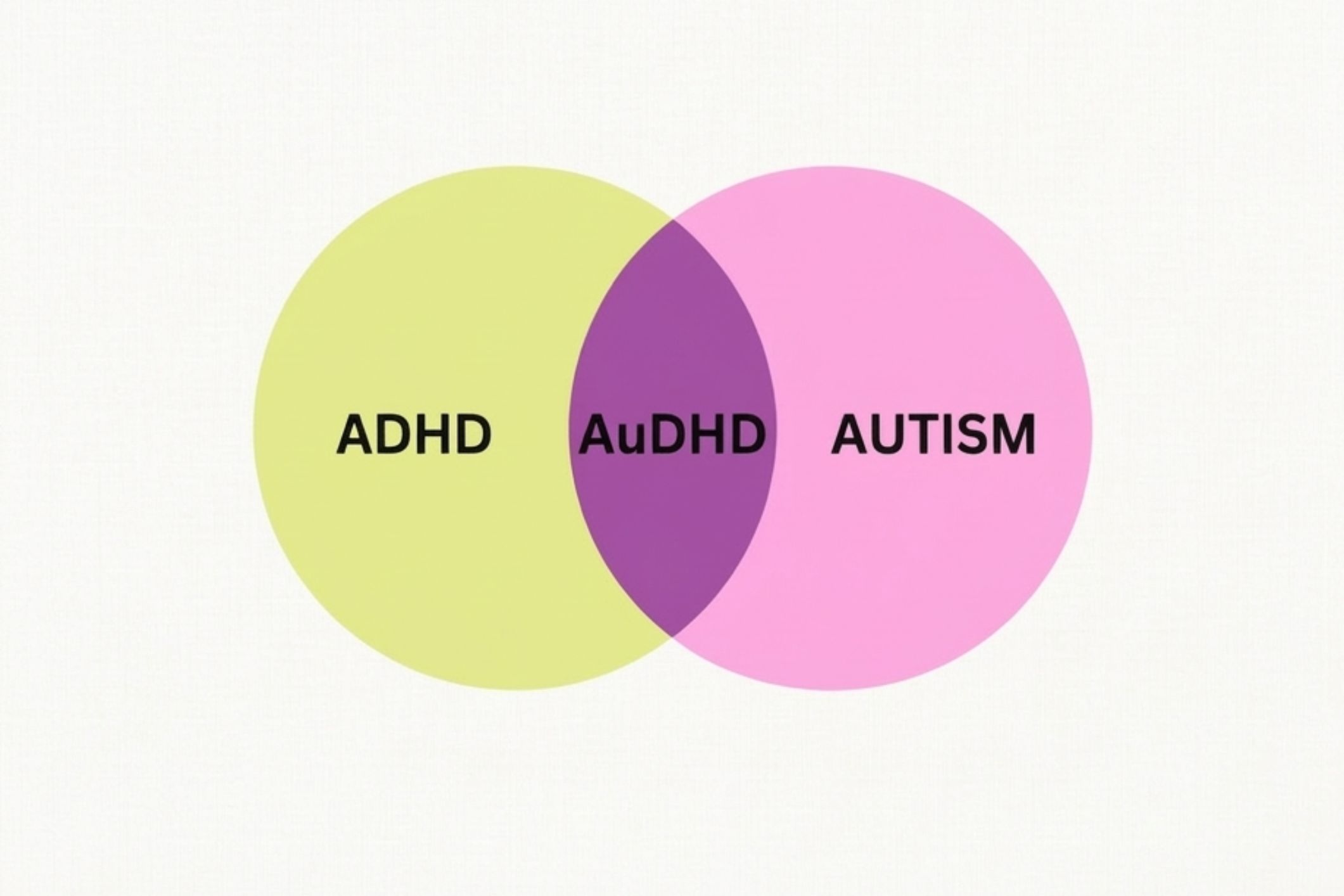
Do you feel like a single diagnosis doesn’t fully capture how you’re feeling, and when you read about ADHD and autism, you see symptoms of both in yourself? Clinicians usually treat autism and ADHD as separate diagnoses, however, “studies have reported increased prevalence of both attention deficit hyperactivity disorder and autistic spectrum disorders.” The term for the co-occurrence of ADHD and autism is called AuDHD. Understanding AuDHD means looking beyond ADHD and autism as separate conditions, and recognizing how they overlap.
How Common Is AuDHD?
Several scientific reviews and clinical studies have found that about 50–70 % of autistic individuals also meet the criteria for ADHD, meaning many people diagnosed with autism show co‑occurring ADHD symptoms. Other studies have looked at strict clinical diagnoses (not just traits) and often found that around 10 % of people with ADHD also meet criteria for autism. Research also indicates that most of the risk for ADHD and autism stems from a combination of genes that affect brain development, attention, and social functioning, which helps explain why they frequently co-occur.
Is AuDHD An Official Diagnosis?
Before 2013, the Diagnostic and Statistical Manual of Mental Disorders (DSM-5) excluded an ADHD diagnosis if autism was present, instead assuming that ADHD symptoms in autistic individuals were manifestations of autism itself. The DSM-5 changed this, allowing clinicians to diagnose ADHD and autism together, giving individuals proper recognition and access to appropriate treatment. While AuDHD is not an official diagnosis in the DSM-5, the term has become widely popularized, as it helps to describe the unique experience of this neurotype.
Why Is Diagnosing AuDHD Challenging?
AuDHD is frequently missed, misdiagnosed, or diagnosed later in life due to multiple contributing factors.
Masking symptoms
Many individuals with AuDHD especially females, are highly skilled at masking. They’ve learned, often from a young age, to suppress or hide traits that can make them seem different from others. Because these traits can be masked, it’s often difficult to diagnose AuDHD.
Overlapping Symptoms
Autism and ADHD share several surface-level symptoms, including emotional dysregulation, difficulty with social situations, and executive dysfunction. Without a comprehensive assessment, it’s easy for one neurotype to be attributed to the other, or for both to be explained by anxiety, depression, or neurodivergence.
Overlooked Co-Occurring Conditions
When one diagnosis is identified first, the second is often missed. A clinician who recognizes autism might interpret ADHD symptoms as part of that presentation and vice versa. Until fairly recently, DSM-5 guidelines required ADHD and autism to be diagnosed separately.
The Unique Experience Of AuDHD Compared To ADHD Or Autism
People with AuDHD often feel like they exist between two worlds. They may relate to parts of both ADHD and autism, yet never feel like either one fully describes their experience. An autistic need for structure and routine can help rein in chaotic ADHD impulses, while ADHD’s high energy and need for novelty can be at odds with an autistic preference for solitude and structure. This constant daily push-and-pull can feel confusing, so understanding the AuDHD dynamic gives people the language and tools to navigate these dualities.
AuDHD Therapy In DC, MD & VA & Online
Effective therapy for AuDHD is tailored for each patient’s individual needs, and acknowledges ADHD and autism as co-occurring neurotypes. Living with AuDHD becomes more manageable when you understand its strengths, symptoms, challenges, and treatment options. At Georgetown Psychology, our clinicians work on executive functioning, emotional regulation, sensory processing, and social skills, often blending multiple therapeutic approaches so you have support and guidance to help you navigate daily life and develop strategies to thrive.
If you have any questions or would like to schedule an appointment, contact Sarah Smathers, our Client Services Specialist, at sarah@georgetownpsychology.com or (301) 652-5550. We have in-person appointments in Georgetown (DC), Bethesda (MD), McLean (VA), and Alexandria (VA), and telehealth services available to patients in 43 states.
Our clinics also offer psychoeducational evaluations, psychological testing, adult ADHD testing, autism assessments, independent school entrance testing, developmental assessments, cognitive baseline testing, and neuroaffirming evaluations.